Summer in Sedona is green creek shade, enormous afternoon thunderheads and nights warm enough to sit outside under the stars. It's also hot. July's average high is about 97°F. The trick is to reshape your day around the heat instead of fighting it.
Hike at first light, and be done by mid-morning
NOAA's 1991–2020 normals put Sedona's average highs at about 94°F in June and 97°F in July and August, and most trails have little shade. Start walking at sunrise and pick shorter trails. Fay Canyon (2.1 miles round trip) and Little Horse (3 miles round trip) both fit before breakfast. Turn back when half your water is gone.
Spend the afternoon in the shade
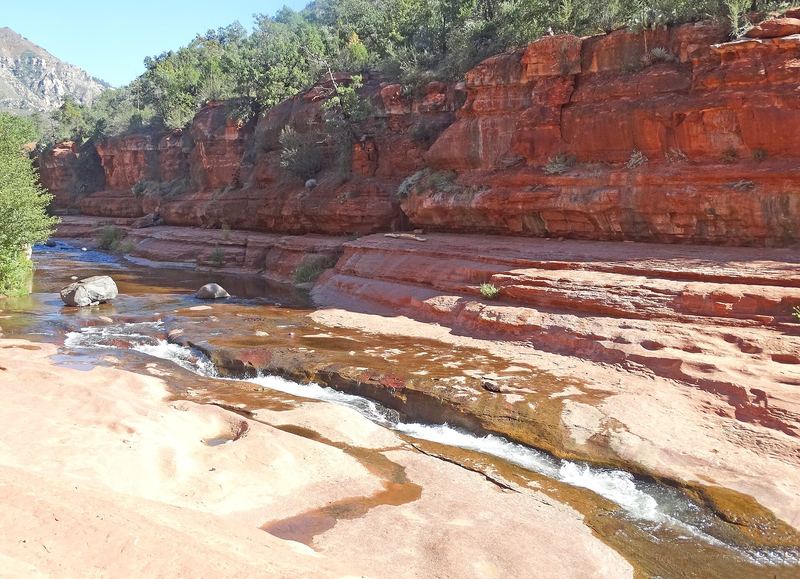
From late morning to late afternoon, stay indoors or near water. Oak Creek's day-use sites are popular summer escapes, but check each site's rules and current conditions first. After the 2026 Pocket Fire and flooding, the Forest Service advised checking the weather before getting in the water.
Watch the sky
Monsoon season runs roughly July through September. Storms can build fast in the afternoon and bring lightning and flash floods to dry washes and creeks. The National Weather Service's advice is simple: when thunder roars, go indoors, and turn around, don't drown.
When thunder roars, go indoors, and turn around, don’t drown.
Know the signs of heat illness
Dizziness, nausea, headache and heavy sweating can mean heat exhaustion. Get to shade, cool off and drink water. Confusion or hot, dry skin can mean heat stroke, which is a medical emergency. Call 911.
Plan it
- A summer day, heat-smart: a timed sample day
- Seasons & weather: month-by-month normals
- Safety & accessibility
- See the best Sedona tours: guided hikes, scenic drives and Grand Canyon day trips
Sources: NOAA NCEI 1991–2020 normals (station USC00027708), NWS heat, lightning and flood safety pages, and the Coconino National Forest Oak Creek reopening notice, checked Oct 20, 2026. Photo: A125125125, CC BY-SA 4.0, via Wikimedia Commons.